
Playing with Generative AI Tool: Mermaid Chart.
I was interested in using the Mermaid Chart to compare and contrast different scenarios. In his book Slow Productivity, Cal Newport argues that doing fewer tasks doesn't necessarily mean completing fewer tasks. The Mermaid Chart, in this context, serves as a visual tool to demonstrate that time spent on non-essential tasks reduces the time available for the important ones.
The Mermaid Chart is a practical generative AI tool that can be used in Chat GPT. Below, you can see the prompt I gave it and what it created for me.
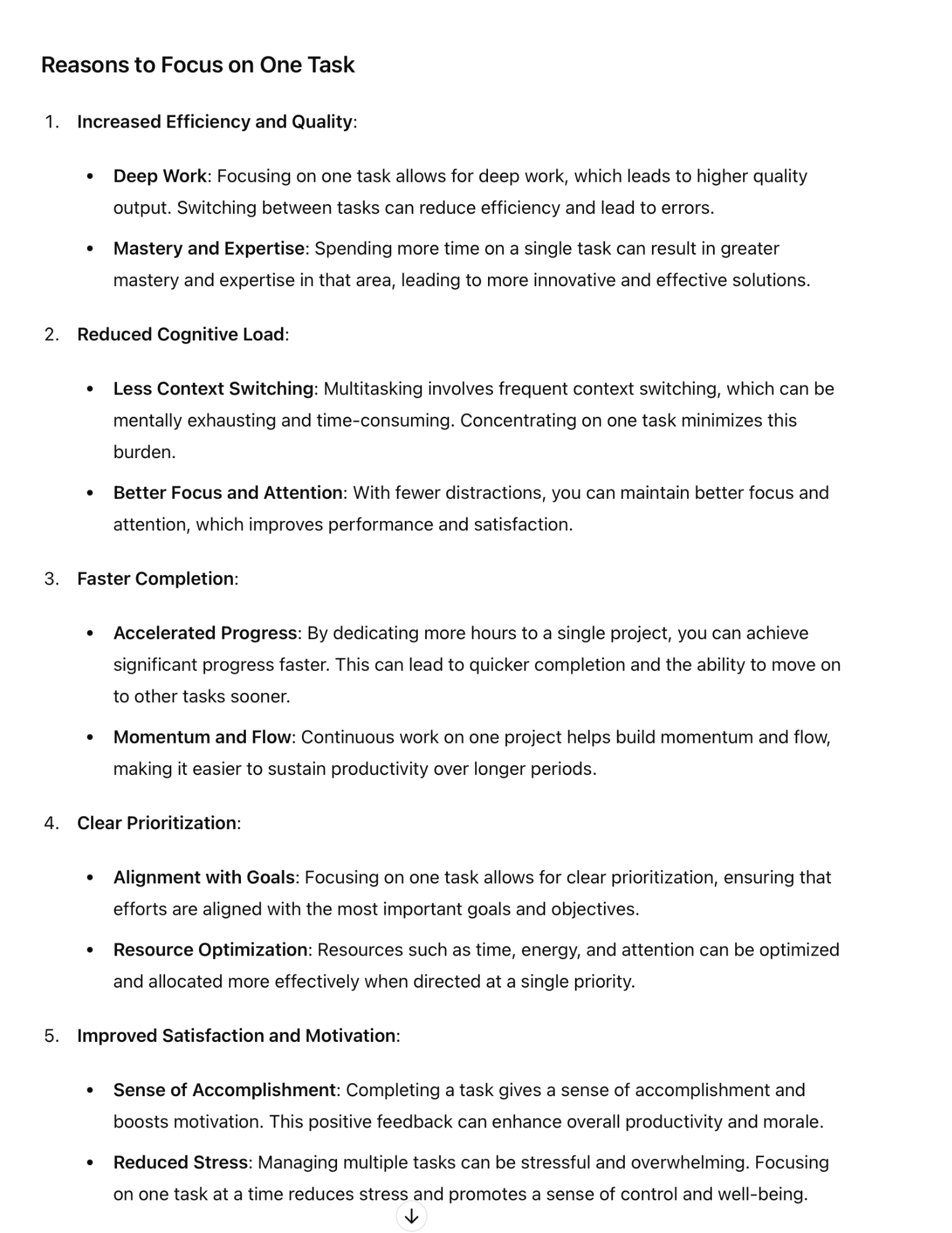
Prompt: Create a visual representation of allocating 21 hours to 7 projects versus assigning the same time to one project. I want to demonstrate visually that doing less doesn't mean finishing fewer tasks. In addition, please give me a few reasons why it is better to focus on fewer tasks.
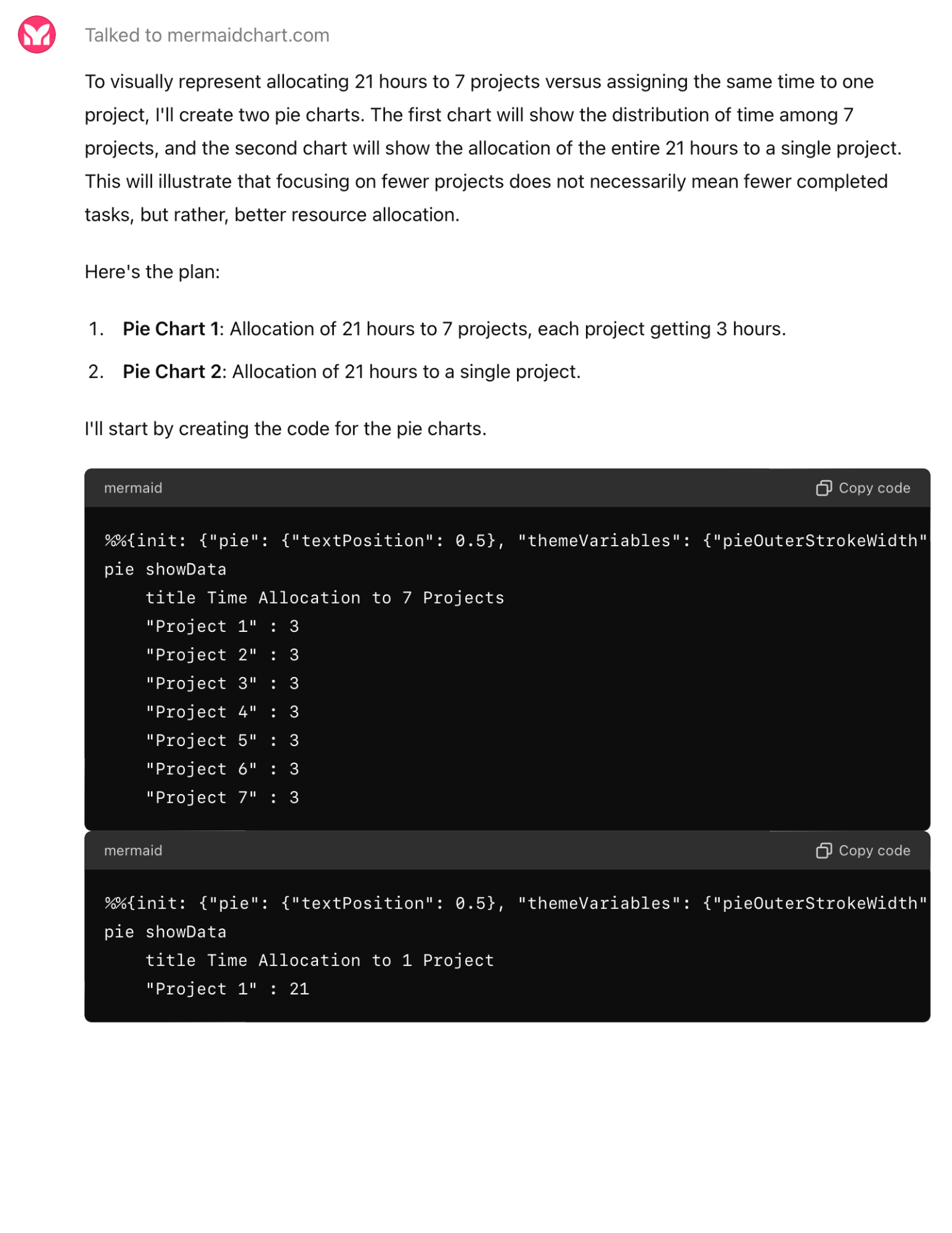
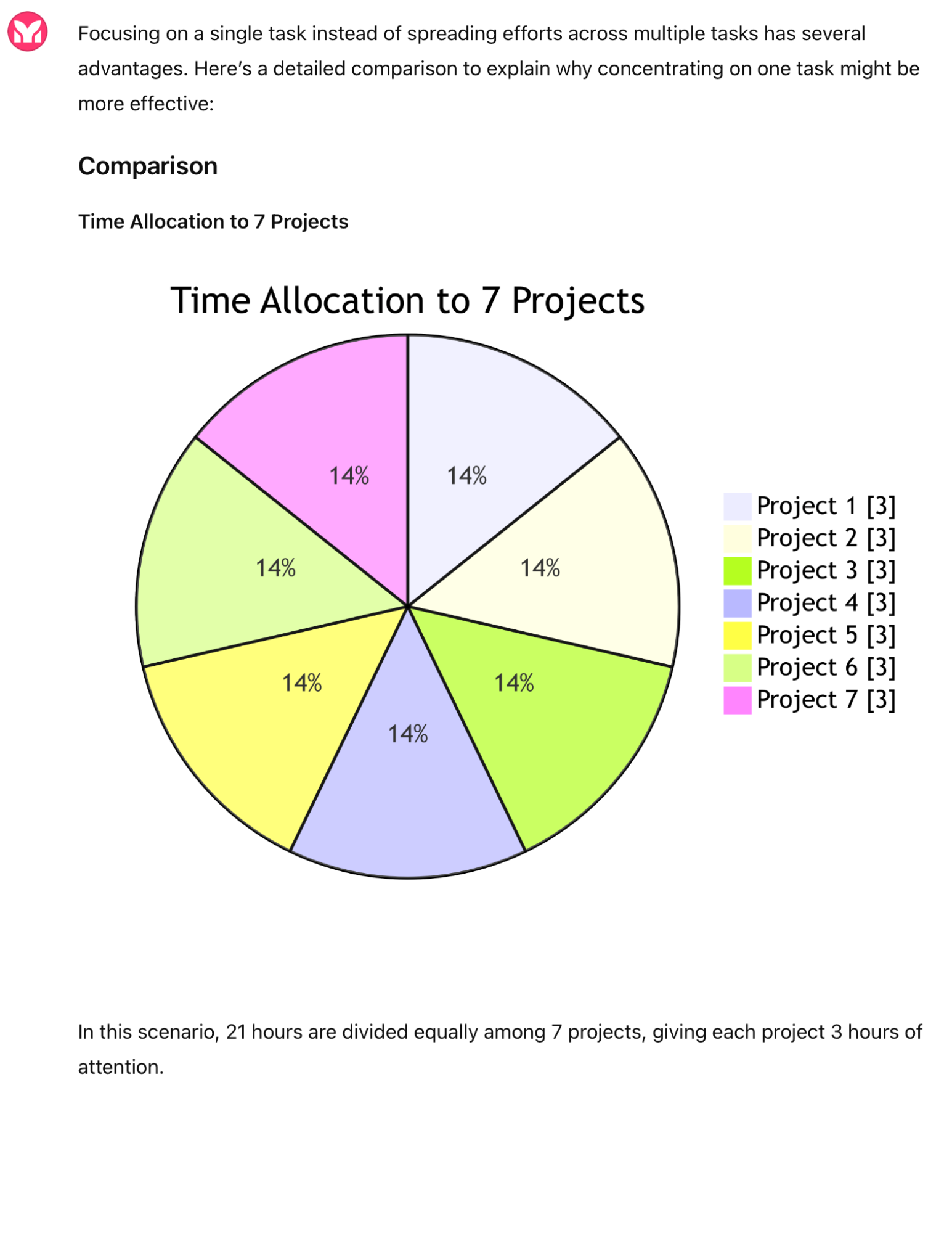
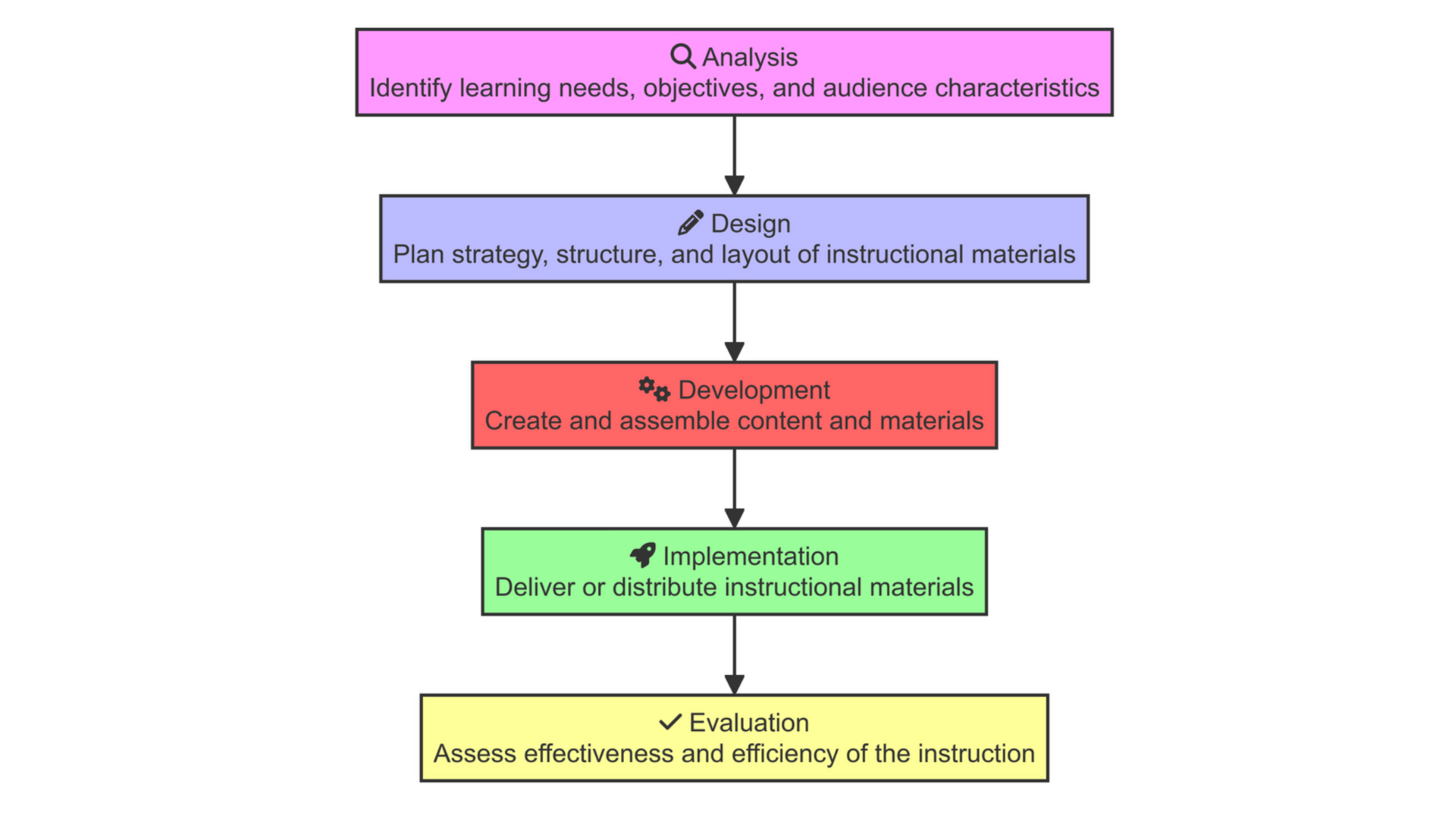
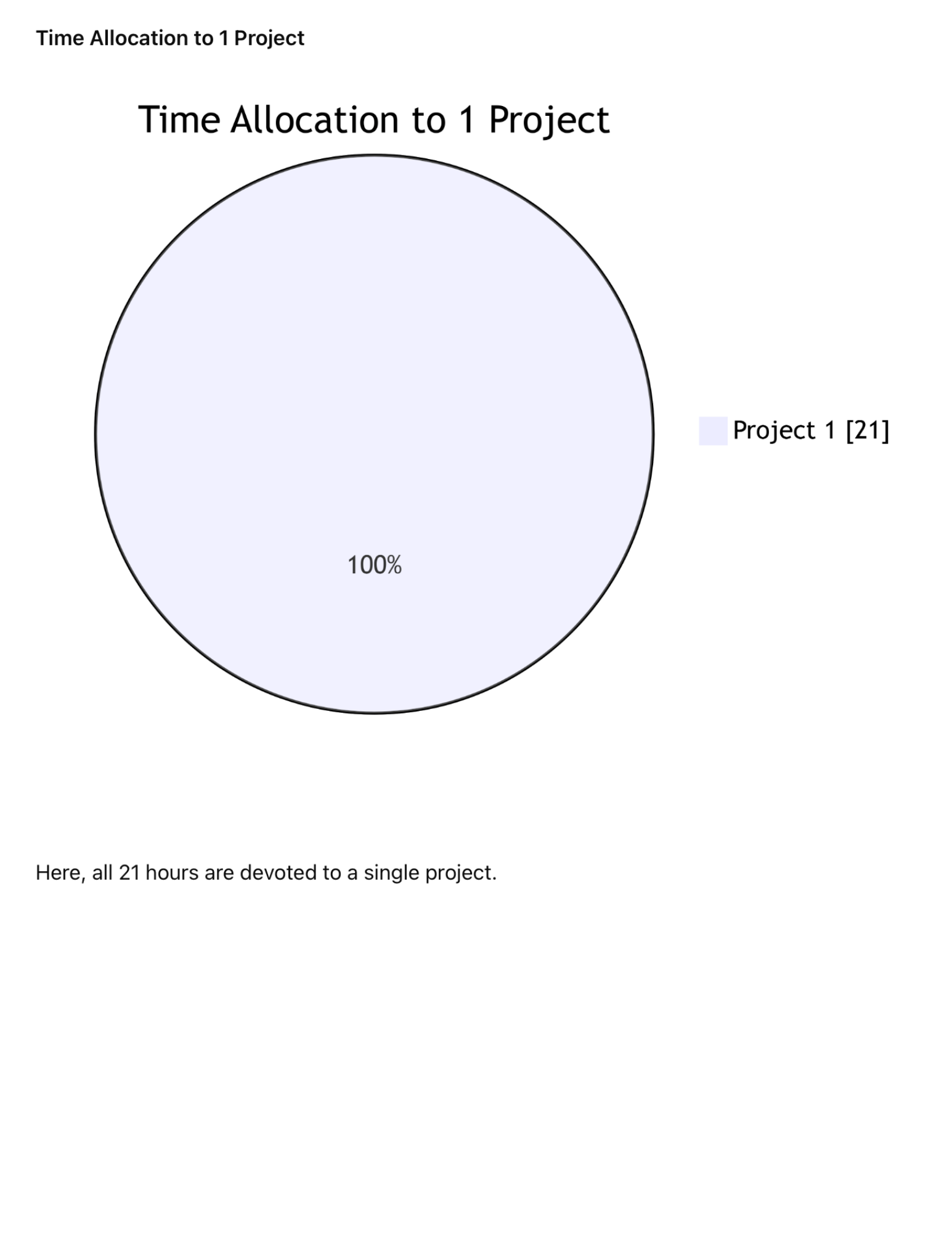
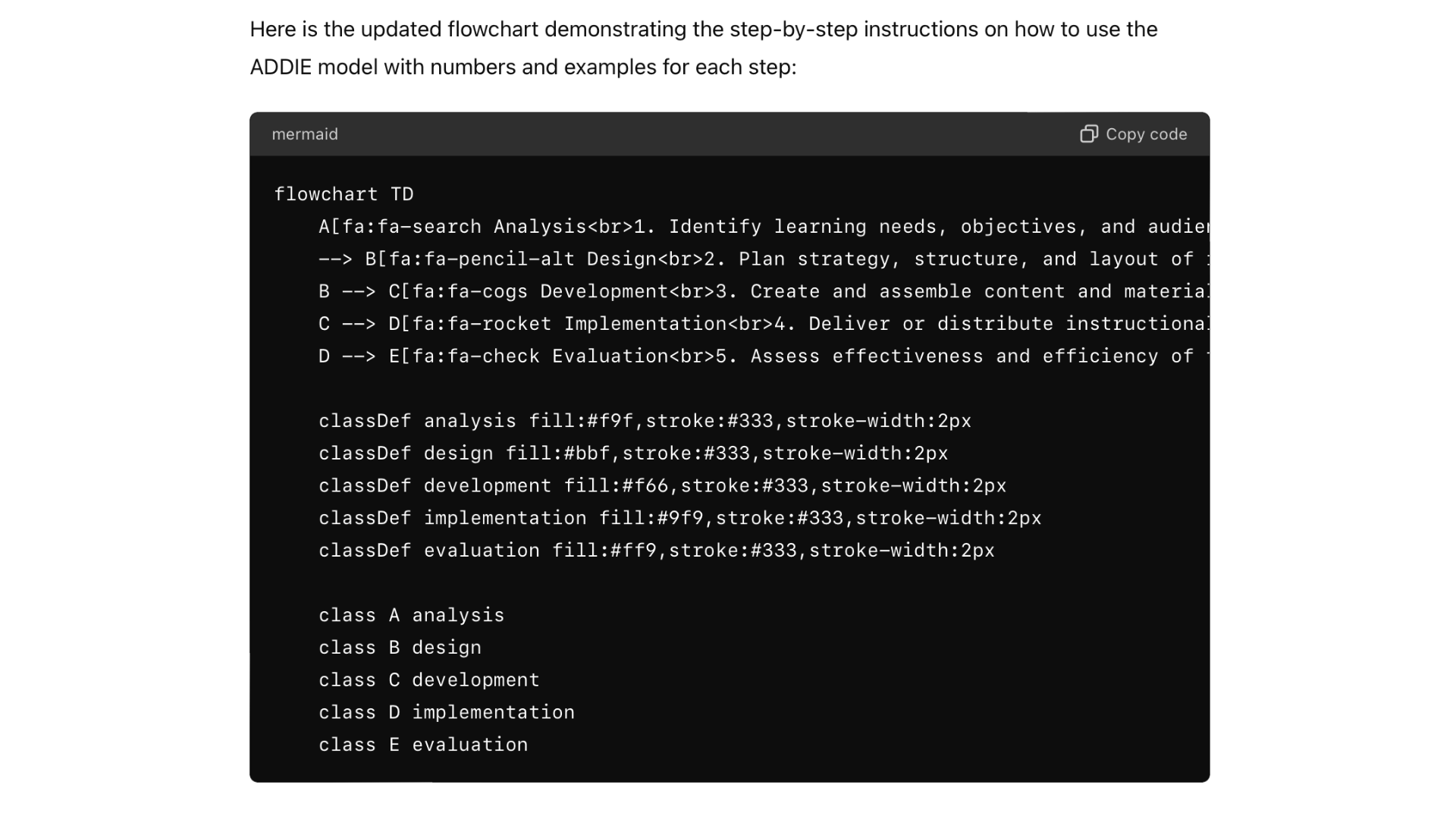
Not fully satisfied, I asked Mermaid Chart to create a flowchart of the Addie model and describe each step. Then, I asked the generative AI to number the steps and provide examples. These were the final results.
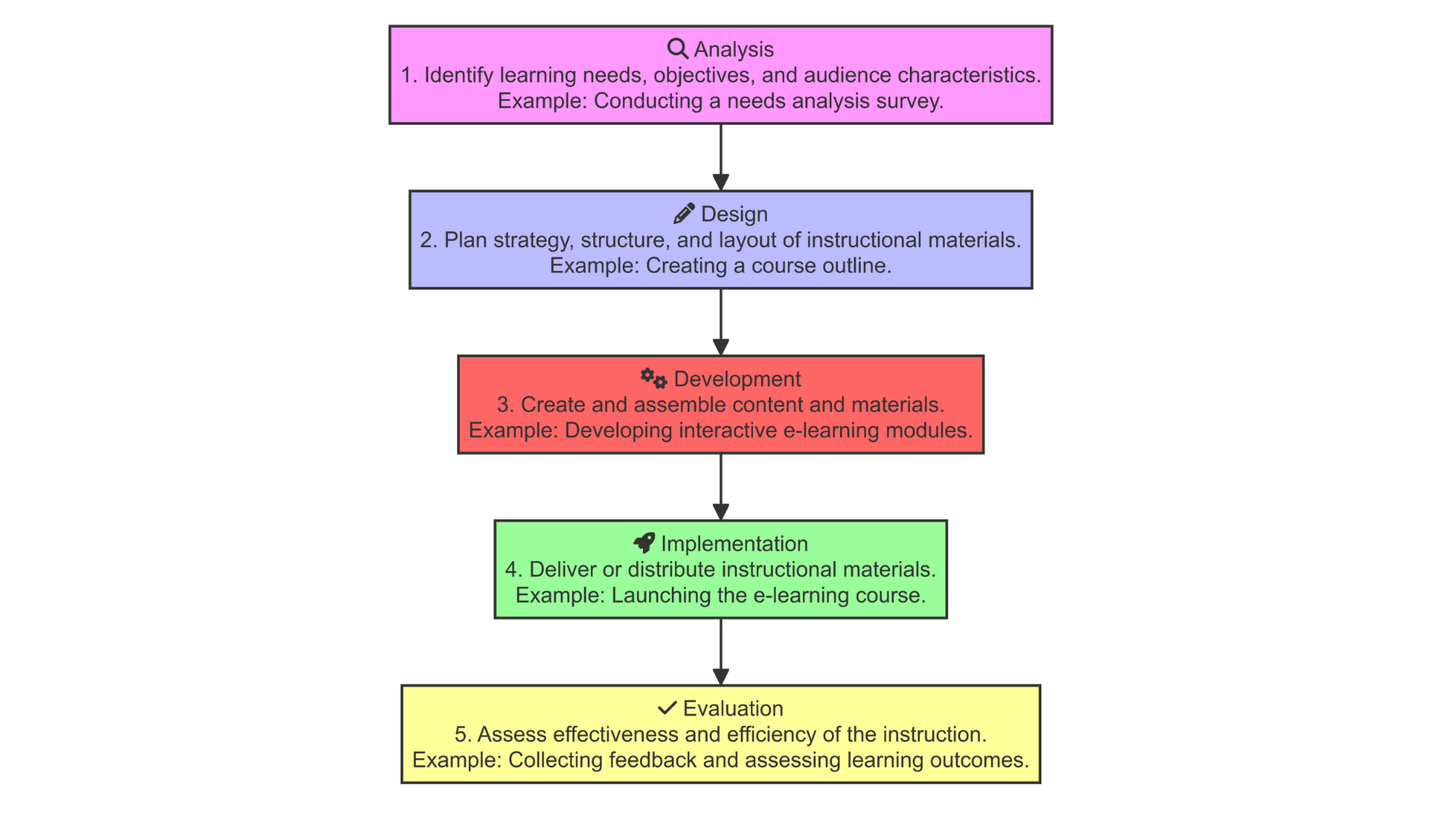
Conclusion: The Mermaid chart not only provides a visual representation of data but also allows full access to the code used to develop the image. This interactive feature enables users to modify the code and the written prompt, making it a versatile tool for creating visual representations of data. Although my free trial has expired, I am eager to explore its potential further, such as its ability to read and create graphs from a .cvs data file.
How can this be used in Corporate Training and Development? If you have to extract data and create charts to demonstrate training completion manually, this tool can save time and create the charts automatically. Often, managers and directors don't have time to review lines of data, so visuals can be more efficient and support better decision-making. However, I also believe this tool can be used in other departments, such as data analysis, organizational development, and finance.