
Julie Dirksen mentions Pull vs. Push as a strategy to use in class when you have novice and expert students together. As an instructor, you can trust experts to draw the necessary information by providing extra resources or materials (DIRKSEN 74-75). The goal here is to encourage learning instead of pushing information towards people. This idea, combined with an interactive model to create a learning opportunity where the knowledge flows both ways, is the secret to keeping learners engaged and improving their skills.
"Regardless of the learning venue (classroom, e-learning, informational website), it’s best to have as interactive an experience as possible. Ideally, you would construct opportunities to see how your learners are interpreting and applying what they learn, so you can correct misconceptions, extend their understanding, and identifying ways to reinforce the learning. "
Encouraging students to take ownership of their learning pursuits by adhering to metacognitive learning strategies should be a priority.
In the book Slow Productivity by Cal Newport, he addresses the need to accomplish things without feeling burned out. This may seem like a wild idea in today's world, but incorporating systems in your day-to-day can support this initiative. Newport also refers to the Pull vs. Push method when discussing time and project management. Instead of pushing projects around and adding more work to overwhelmed employees, create an idea pool or project pool that employees can go to when they are ready to take on another project (Newport 100-102).
The push vs. pull method offers learners the freedom to choose their learning path, fostering a sense of autonomy and trust. This encouragement, often overlooked due to the perceived mandatory nature of learning, can be a source of enjoyment for students, allowing them to engage and identify numerous career opportunities.
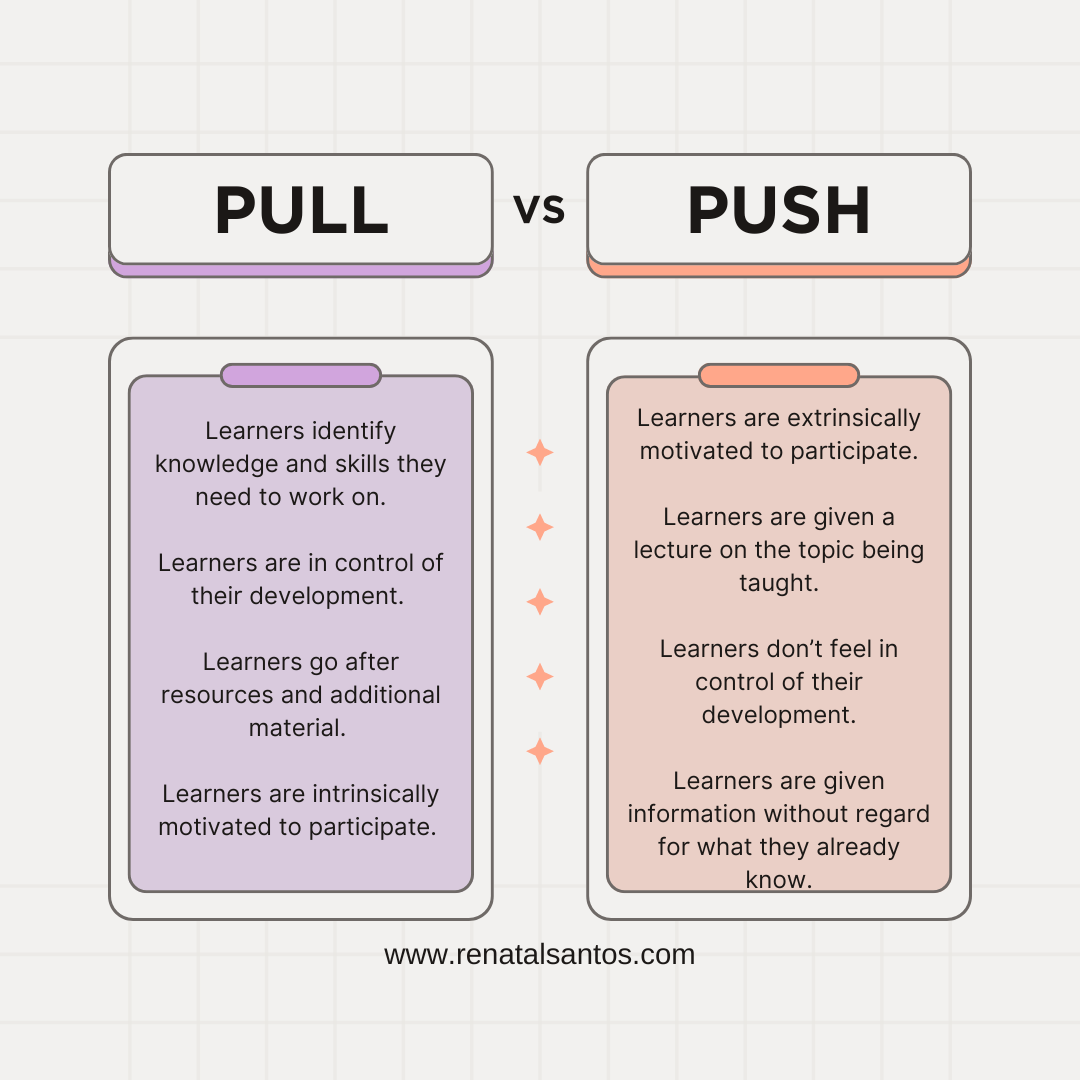
Overall, we can clearly state that pressuring people to do or learn something because it is mandatory will build resentment toward learning, and students will be disengaged. So, how can we create great learning experiences and encourage learners to take charge of their development?
Identify the intrinsic motivations your learners could have and use them to encourage learners to participate.
Allow learners to support each other in class instead of just lecturing them on the subject.
Encourage learners to learn metacognitive strategies.
Sprinkle retrieval, testing, and spaced learning into your program to enhance practice and long-term memory.
Time is a precious resource for adult learners. The Pull vs. Push method can help them make the most of every learning opportunity by making learning more efficient and fostering a sense of productivity and motivation.
Sources:
Dirksen, Julie . Design for How People Learn. 2nd ed., New Riders, 2015.
Newport, Cal. Slow Productivity: The Lost Art of Accomplishment Without Burnout. Portfolio, 2024. pp. 100-103.